
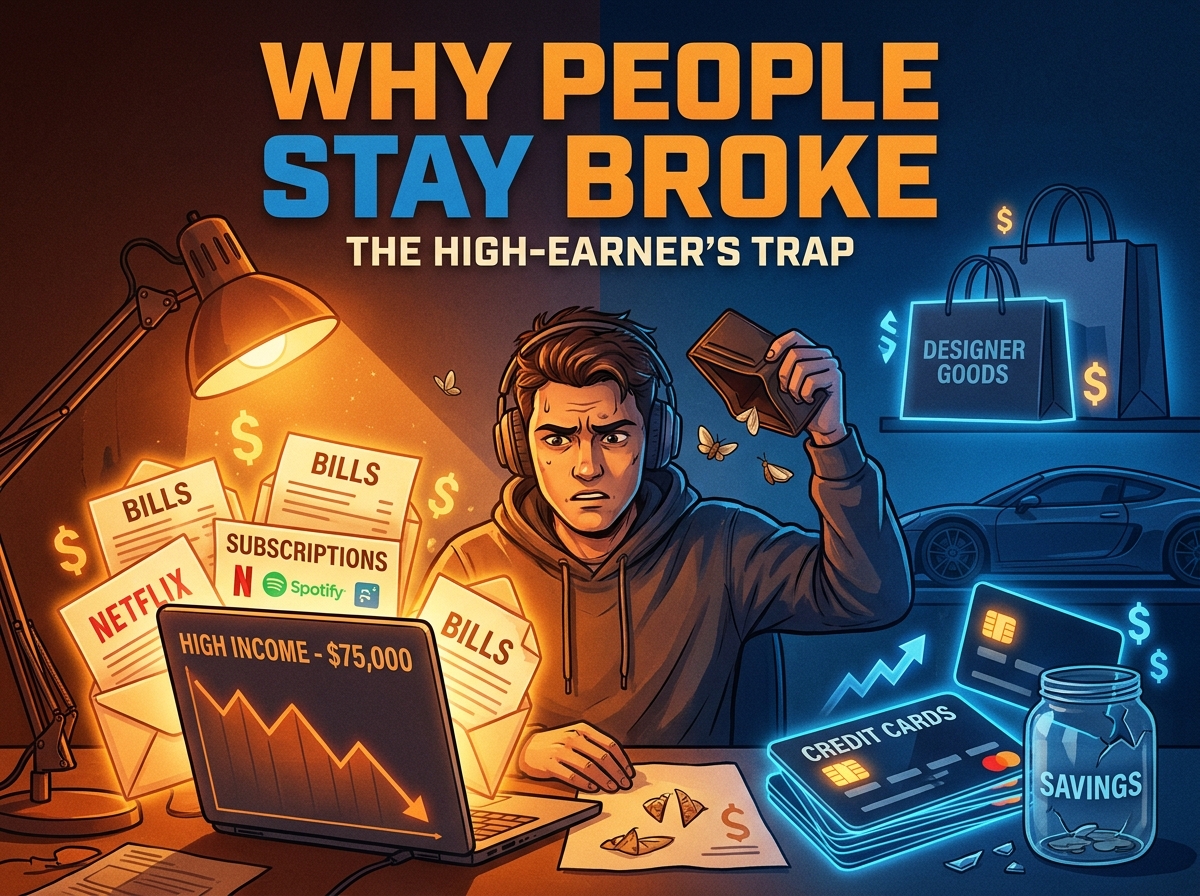
Earning More but Feeling Broke Anyway
It usually starts with good news—a raise, a new job, or a side hustle that finally pays off. You remember thinking this extra income would be the turning point, the moment money stress would ease. Yet somehow, a few months later, you’re still living paycheck to paycheck, still anxious when bills are due, still wondering why people stay broke even when they earn more. This confusion is incredibly common, and it’s often the first sign that the issue isn’t how much money you make, but how money flows through your life once it arrives.
Lifestyle Inflation Sneaks In Quietly
One of the biggest hidden reasons why people stay broke is lifestyle inflation. When income increases, spending tends to follow—almost automatically. You upgrade your apartment because it feels reasonable now, eat out more because you’re busy, and justify nicer purchases because you’ve “earned it.” None of these decisions feel irresponsible on their own, but together they absorb every extra dollar. Instead of your raise creating breathing room, it simply funds a more expensive version of the same financial stress.
The Emotional Triggers Behind Spending
Money decisions are rarely just logical—they’re emotional. Many people spend to cope with stress, reward themselves for hard work, or feel successful in the moment. A tough week turns into a shopping spree, convenience food replaces meal planning, and small impulse buys become daily habits. These patterns don’t happen because people are careless; they happen because spending temporarily feels like relief. Over time, emotional spending becomes routine, quietly reinforcing the cycle of why people stay broke.
The Money Mindset That Keeps You Stuck
Another overlooked reason why people stay broke is a limiting money mindset. Thoughts like “I’ll save when I make more,” or “Money is meant to be enjoyed, not managed,” feel harmless—but they delay progress indefinitely. When saving and planning are always postponed for a future version of yourself, financial stability never quite arrives. Without changing how you think about money, higher income simply means higher dependence on that income.
Living Without a Clear Financial Direction
Many people don’t actually know what they want their money to do for them. Without a clear goal—like building savings, paying off debt, or creating long-term security—money gets spent reactively instead of intentionally. It goes toward urgency, convenience, and habit rather than purpose. This lack of direction is a major reason why people stay broke, even when they’re smart, hardworking, and motivated in other areas of life.
When Being Broke Feels “Normal”
Another subtle trap is normalization. If everyone around you struggles with money, it starts to feel like that’s just how adulthood works. Constant stress, credit card balances, and zero savings become expected. You tell yourself you’re doing “fine,” but deep down you know surviving isn’t the same as building a future. Accepting this mindset makes it easier to stay stuck—and harder to imagine a different reality.
Awareness Is the Real Turning Point
The good news is that people don’t stay broke because they’re incapable—they stay broke because they’ve never paused to examine their habits. Real change starts with awareness: noticing where your money goes, understanding why you spend, and recognizing which habits no longer serve you. You don’t need extreme budgeting or deprivation. Small, intentional shifts can completely change your financial trajectory.
Choosing a Different Financial Story
If you’ve ever wondered why people stay broke, the answer isn’t just income—it’s unconscious habits, emotional spending, and unchallenged beliefs. The moment you decide to treat money as a tool instead of a reward, things begin to shift. When you align your spending with your values and future goals, earning more finally translates into keeping more. And that’s when money stops being a constant source of stress and starts becoming a source of freedom.
Leave a Reply